
Spherical displays
that hold attention
Interactive spheres for close-up discovery. Bright LED landmarks for larger spaces. Pufferfish helps shape the display, content and delivery around what the audience should experience.
Real installation · Norwegian Nature CentreA digital canvas people can experience from more than one angle
A spherical display carries moving image around a three-dimensional surface. It can make planetary and spatial subjects feel intuitive, turn brand content into a physical landmark, or give a group a shared object to explore together.
The right system depends on the audience and the environment. Some briefs call for close-range, multi-user touch. Others need greater scale, brightness and visibility across a large space. The geometry may be a complete sphere, a front-facing hemisphere or a form integrated into architecture.
Pufferfish begins with those differences rather than forcing every project into one format.
Experience shaped by real audiences and real spaces
Pufferfish was founded in Edinburgh in 2004. Since then, spherical display systems have travelled into museums, science centres, universities, brand environments and live experiences. That practical history informs how we think about interaction, content, installation and long-term operation today.
Choose the technology around the moment you want to create
Touch and direct-view LED answer different briefs. Both can create an unmistakable spherical presence.
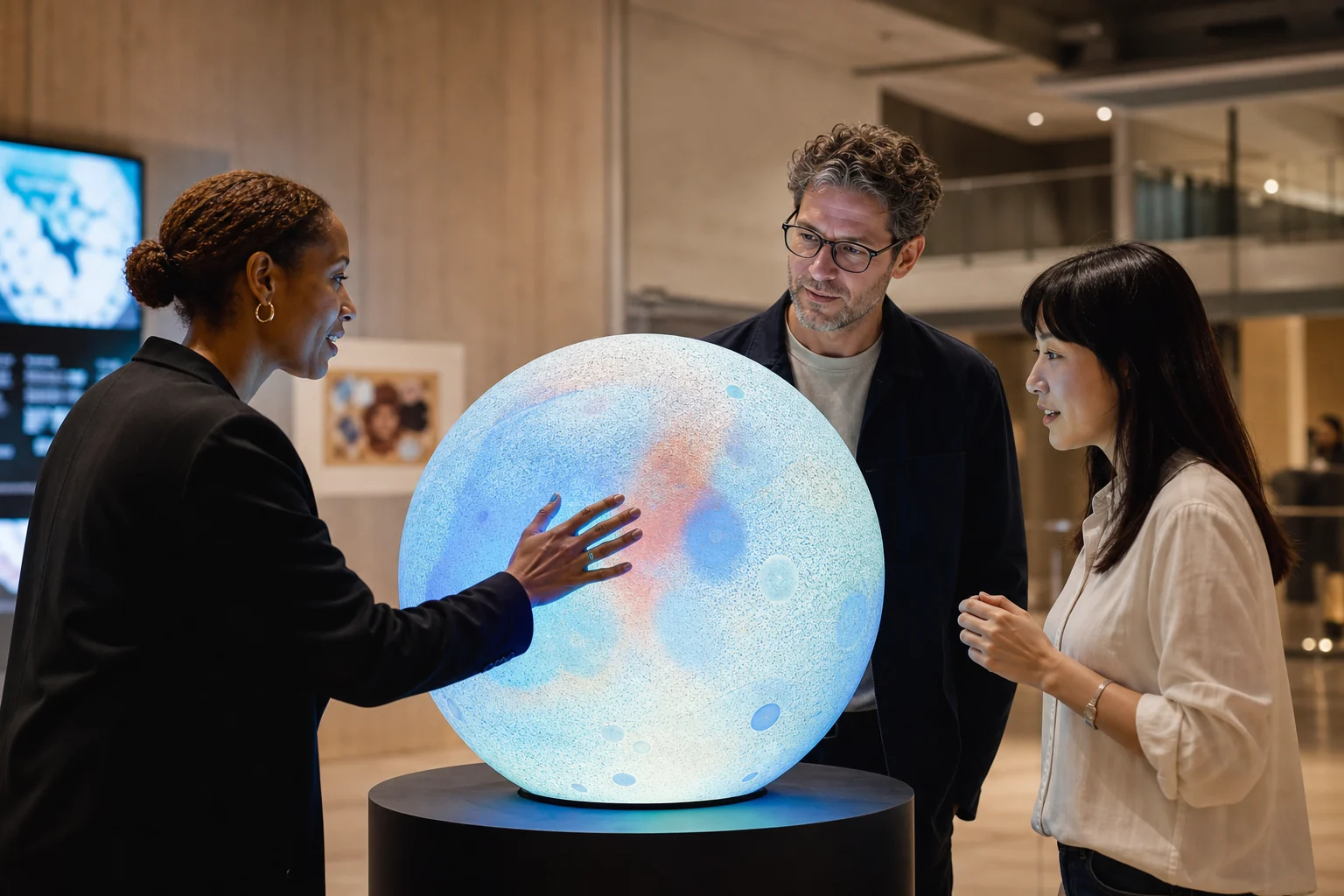
PufferTouch
Choose PufferTouch when people should gather close, rotate, reveal, compare and discover content together. Three complete spheres and two front-facing hemispheres form one touch-responsive platform.
- Close-up, multi-user exploration
- Museums, learning and guided experiences
- Permanent installation or supported rental
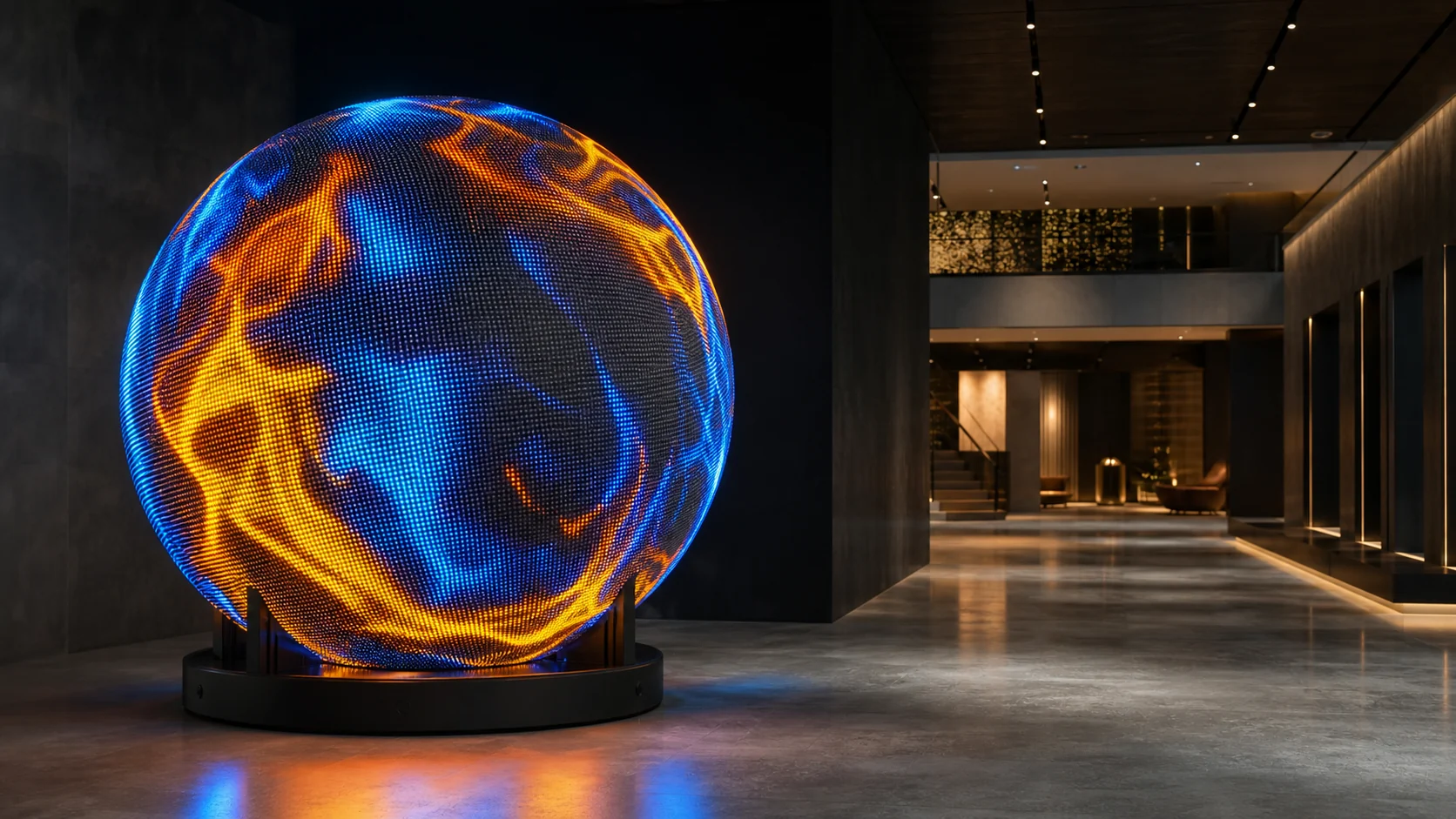
Spherical PufferLED
Explore direct-view LED when the display must read across longer sightlines, perform in brighter surroundings or become part of a larger architectural experience. Each installation is shaped around the project rather than selected from a fixed model list.
- Freestanding, suspended or integrated forms
- Large public, corporate and live environments
- Project-led engineering and specialist partners
A useful starting point
| Project question | PufferTouch | Spherical PufferLED |
|---|---|---|
| How does the audience take part? | Close-up, shared touch and guided exploration | Primarily visual impact across a wider space |
| Where is it strongest? | Accessible, human-scale visitor and learning experiences | Bright, large or architectural environments with longer sightlines |
| What forms are available? | Three sphere and two hemi configurations | Project-led sphere or hemisphere concepts |
| How is content approached? | Interactive applications, mapped media and PufferOS workflows | Mapped motion content, playback, monitoring and system control |
| What should happen next? | Compare configurations or arrange a demonstration | Begin with space, scale, sightlines and installation requirements |
A complete sphere or a focused hemisphere?
Choose a sphere when the audience can gather around
A complete sphere creates a recognisable centrepiece with a continuous surface visible from every direction. It works naturally in open spaces where people can circulate, share the view or interact from more than one side.
Choose a hemi when the experience needs a clear front
A hemisphere focuses the visual experience towards a defined audience position. It can support accessible interaction heights, wall or furniture integration, stage settings and spaces with a directed visitor flow.
Documented installations, not imagined outcomes
Explore spherical displays operating with real audiences across science, culture and visitor experience.

Taking planetary science on tour
A portable spherical canvas made planetary content visible to shared audiences.
Explore the projectBringing natural systems within reach
An interactive focal point invited visitors to explore landscapes together.
Explore the project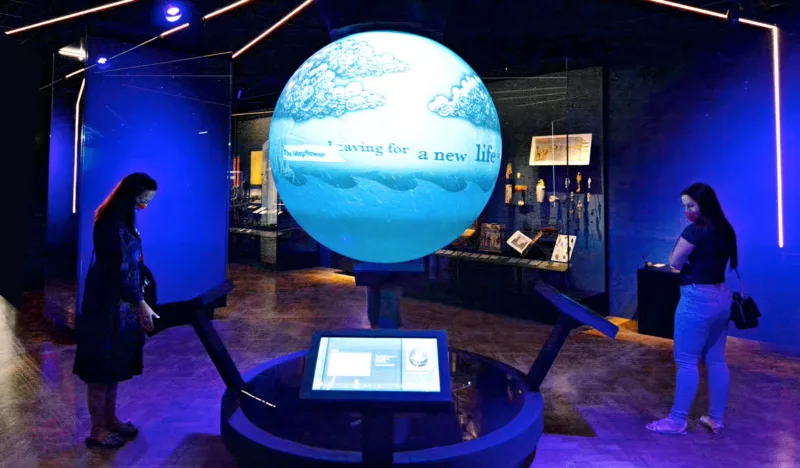
A focal point within the museum journey
A distinctive spherical form helped give the surrounding story a memorable centre.
Explore the projectThe curve changes more than the screen
Good decisions connect the audience, geometry, image, structure and operating model from the beginning.
- 01
Audience and purpose
Define what people should notice, understand, feel or do—and whether the experience is close-up, facilitated or designed for a crowd.
- 02
Space and sightlines
Map visitor flow, nearest viewing distance, important approaches, ambient light and the physical presence the installation should have.
- 03
Form and placement
Choose sphere or hemi, then resolve scale, height, floor, wall or suspension requirements and access around the finished system.
- 04
Content and interaction
Design imagery, perspective, mapping and user journeys for the curved canvas rather than treating it as a flat screen with a different shape.
- 05
Integration and servicing
Coordinate power, data, structure, sound, software, ventilation, maintenance access and recovery with the wider environment.
- 06
Delivery and operation
Plan testing, logistics, installation, training, content ownership and support around the way the experience will be used over time.
The display is only one part of the experience
Stories told differently
Content, motion, interaction and applications shaped for unusual canvases.
Explore Studio PufferTechEngineering designed beautifully
PufferTouch, PufferLED and the systems that make specialist displays practical.
Explore Tech PufferEventsExperiences delivered seamlessly
Worldwide rental, logistics, installation and live support for temporary moments.
Explore EventsDifferent settings ask different things of the display
Museums & visitor attractions
Invite curiosity, shared discovery and repeatable public use.
Explore visitor experiences →02Science & research
Make spatial data and complex systems easier to see and discuss.
Explore science experiences →03Education
Give learners a shared object for demonstration and investigation.
Explore education experiences →04Corporate & experience centres
Turn products, strategy and data into a visible conversation starter.
Explore corporate experiences →05Retail
Create a landmark that rewards attention with deeper product discovery.
Explore retail experiences →06Events & activations
Build a memorable focal point with delivery support around show day.
Explore PufferEvents →What project teams usually ask first
Every installation is different, but these answers are a practical place to begin.
What is a spherical display?
It is a digital display whose visible image wraps around a sphere or hemisphere. Depending on the technology, it can support close-up touch and shared exploration or create a bright visual landmark for larger spaces.
Should we choose PufferTouch or spherical LED?
Choose PufferTouch when multi-user interaction and close-range detail are central to the experience. Explore spherical PufferLED when the priority is brightness, larger scale, long sightlines or architectural integration. We can help compare both routes against the same brief.
When is a hemisphere more suitable than a complete sphere?
A hemisphere is useful when the experience needs a clear front, an accessible interaction position, wall or furniture integration, or a defined audience flow. A complete sphere suits open settings where people can see or gather around the canvas from several directions.
Does conventional flat-screen content work on a sphere?
Existing assets can often contribute, but composition, scale, perspective, motion and interaction usually need to be reconsidered for a curved surface. PufferStudio can adapt supplied material or create content specifically for the finished canvas.
Can a spherical display be rented for an event?
PufferTouch rental is available worldwide, with fleets based in the UK/Europe and the USA. Equipment availability and support are confirmed against your brief, dates and location. PufferEvents can help with planning, logistics, installation and on-site support. Project-led LED availability depends on the intended scale and installation.
What information helps you shape an initial recommendation?
Tell us about the audience, purpose, location, lighting, approximate scale, viewing distance, desired interaction, project dates and whether the experience is temporary or permanent. An early sketch or photograph of the space is useful even before a full brief exists.
Tell us what the audience should experience
Bring us the objective, the space, the approximate scale or simply the early idea. We will help identify whether PufferTouch, spherical PufferLED or another route deserves the next conversation.
- Permanent installations
- Demonstrations and rental
- Content and interactive applications
- Early-stage spherical LED concepts